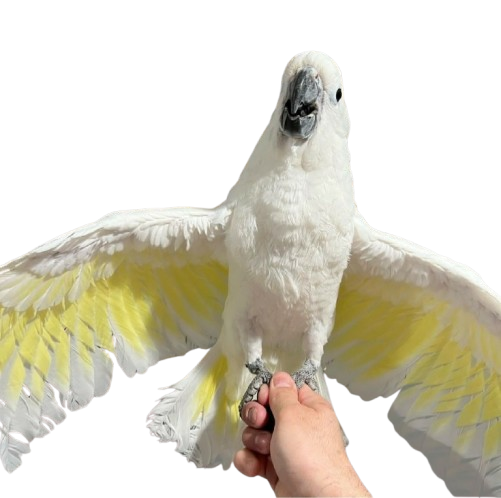
Do cockatoos get separation anxiety?
Do cockatoos get separation anxiety? Yes, they absolutely do, and in my decades as a breeder, I’ve found that cockatoos are perhaps more prone to this emotional distress than almost any other parrot species due to their highly social, “velcro” nature. Because cockatoos are hardwired to be with a flock 24/7, being left alone in a quiet house can trigger a genuine panic response—leading to symptoms like excessive screaming, feather plucking, or even self-mutilation.
In this guide, I’ll explain how to recognize the early warning signs of distress, how to create a “separation-proof” environment for your bird, and why our philosophy at COCKATOO FOR SALE HOME focuses on building independent confidence from the very first day. Whether you are a new owner or a seasoned avian enthusiast, understanding the psychological depth of these birds is the key to a happy, quiet, and feather-perfect companion.
Key Takeaways
- High Susceptibility: Cockatoos are “ultra-social” and view their human owners as their primary flock mates.
- Core Symptoms: Pacing, screaming when you leave the room, and destructive chewing are primary indicators of anxiety.
- Prevention Strategies: Establishing a predictable routine and using “low-arousal” departure cues can significantly reduce stress.
- Independent Play: Teaching your bird to forage and play alone is vital for their long-term mental health.
Do cockatoos get separation anxiety?
When people ask me “Do cockatoos get separation anxiety?”, I usually tell them to think of a cockatoo as a toddler that never grows up and happens to have a pair of bolt cutters on its face. In the wild, a cockatoo is never—and I mean never—truly alone. They eat together, fly together, and sleep together.
So, when we take that bird and put it in a living room while we go to a nine-to-five job, it goes against every instinct they have. I’ve seen birds that start “winding up” the second they hear their owner’s car keys jingle. That’s not just them being loud; that’s a bird experiencing a spike in cortisol because they anticipate the “abandonment” of the flock.
I remember an Umbrella Cockatoo named Casper who stayed with me for a while. Casper was a “velcro bird” to the extreme. If his owner even walked toward the kitchen to grab a glass of water, Casper would let out a scream that could peel paint. That is a classic case of what happens when a bird hasn’t been taught how to be alone. If you’re asking “Do cockatoos get separation anxiety?”,
the answer is a resounding yes, but the more important question is: what are we doing to cause it? Often, we shower them with 100% attention the moment we are home, making the 0% attention when we leave feel like a total vacuum. It’s that contrast that creates the panic. At COCKATOO FOR SALE HOME, I always tell my clients that the best gift you can give a cockatoo isn’t a new toy—it’s the ability to be okay when you aren’t in the room.
Recognizing the Signs of Separation Distress in Large Parrots
If you suspect your bird is struggling, you have to look past the noise. While screaming is the most obvious sign, there are subtler things to watch for. I’ve spent countless hours observing our birds at COCKATOO FOR SALE HOME, and here’s what I’ve noticed in birds that are starting to feel the pressure of being alone.
- Stereotypic Behaviors: This is a fancy way of saying repetitive movements. Does your bird pace back and forth on its perch? Do they flip their head in a specific pattern over and over? This is often a sign of a bored, anxious mind trying to soothe itself.
- Feather Destructive Behavior: This is the one every owner dreads. When a cockatoo starts chewing on its chest feathers or, worse, picking at its skin, it’s often an outlet for the anxiety they can’t express otherwise. I think of it like a human biting their nails, but much more severe.
- The “Contact Call” Gone Wrong: Every bird has a contact call—a quick “Where are you?” shout. In an anxious bird, this doesn’t stop when you don’t answer. It escalates into a full-blown, ear-piercing siren that can last for hours.
- Destructive Chewing: If you come home and your cage bars are mangled or the wooden molding around your door is gone, that’s not just “being a bird.” That’s a bird trying to “get out” to find you.
How to Prevent Separation Anxiety Before It Starts
I’ve found that the first few weeks of a bird’s life in a new home are the most critical. When you first get your bird from COCKATOO FOR SALE HOME, the temptation is to hold them for eight hours a day. Don’t do it. I know, it sounds heartless, but you’re setting them up for failure. You need to “ignore” them for short bursts while you’re still in the house. Let them see you doing dishes or watching TV without them on your shoulder. This teaches them that “being near” is just as good as “being on.”
Another trick I use is the “low-arousal departure.” Most people make the mistake of having a big, dramatic goodbye. “Goodbye, sweetie! Mommy will be back! I love you!” This just raises the bird’s energy level right before you disappear. Instead, try stopping all interaction five minutes before you leave. No eye contact, no talking. Just walk out. It makes your departure feel like a non-event rather than a tragedy. If you’re still wondering “Do cockatoos get separation anxiety?”, just know that your own energy levels play a huge part in it. If you’re stressed about leaving, they’ll be stressed about you leaving.
Top Cockatoo Breeders and Species Comparison
Choosing the right species can actually help mitigate these issues, as some cockatoos are naturally more independent than others. As Michael Anderson, I’ve worked with almost every type, and here is how they usually stack up in terms of “alone-time” temperament.
| Cockatoo Species | Anxiety Risk | Best Feature for Busy Owners |
| Galah (Rose-Breasted) | Low to Moderate | Very independent; enjoys ground-foraging alone. |
| Goffin’s Cockatoo | Moderate | Highly intelligent; can be occupied by complex mechanical puzzles. |
| Umbrella Cockatoo | Very High | Extremely affectionate, but requires the most “independence training.” |
| Moluccan Cockatoo | Very High | Needs a very structured routine to feel secure. |
| Bare-Eyed Cockatoo | Low | Playful and goofy; less prone to “velcro” syndrome. |
User Guide: Creating an “Enrichment Sanctuary”
To answer “Do cockatoos get separation anxiety?”, we have to look at their environment. If their cage is just a box with a swing, of course they’ll be anxious. You want their cage to be a “happy place” where all the best stuff happens. I recommend the following:
- The “Departure Toy”: Save their absolute favorite treat—maybe a whole almond in the shell or a specialized foraging toy—for the exact moment you leave. This creates a positive association with your exit.
- Audio-Visual Stimulation: I often leave on nature documentaries or “Bird TV” (YouTube has great long-form videos of wild parrots). The sound of other birds can be very comforting to a lone cockatoo.
- Foraging Stations: Hide their food. Don’t just put it in a bowl. Wrap pellets in paper, hide seeds in cardboard tubes, or use acrylic foraging drawers. A bird that is busy working for its lunch doesn’t have time to worry about where you went.
Shipping and Travel for Anxious Birds
If you are moving or have ordered a bird through COCKATOO FOR SALE HOME, shipping can be a stressor. In 2026, we utilize enhanced climate-controlled transport that includes pheromone-infused bedding (specifically designed for avian stress) to keep the birds calm. We also ensure that the birds have a familiar comfort item, like a specific perch or a soft toy, to bridge the gap between our aviary and your living room.
Conclusion
So, do cockatoos get separation anxiety? Yes, but it isn’t an unavoidable fate. It’s a reflection of their deep capacity for love and flock-bonding. By providing a structured routine, encouraging independent play, and choosing a breeder like COCKATOO FOR SALE HOME that prioritizes psychological health, you can have a bird that is both a loving companion and a confident individual. My name is Michael Anderson, and I’ve learned that the most “human” thing about these birds is their need for security. Give them that, and they will give you a lifetime of joy without the constant screaming.
Frequently Asked Question
Q: Should I get a second bird to keep my cockatoo company and stop the anxiety?

A: This is a double-edged sword. While a second bird can provide social interaction, it’s not a guaranteed “fix.” Sometimes you just end up with two anxious birds that scream at each other! Additionally, cockatoos are very picky about their friends; they might not like the new bird at all, leading to territorial aggression. I always recommend fixing the behavioral issues with your first bird through training and enrichment before even considering adding a second “flock mate” to the mix.