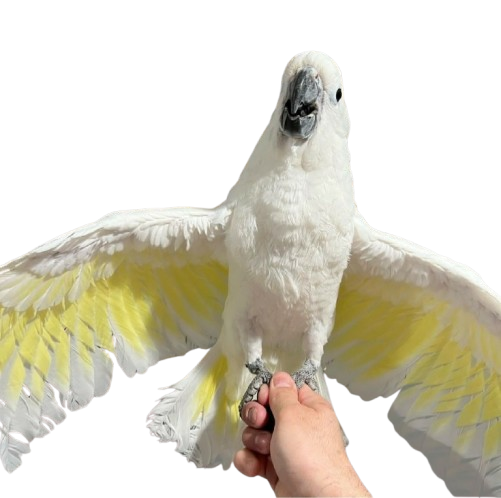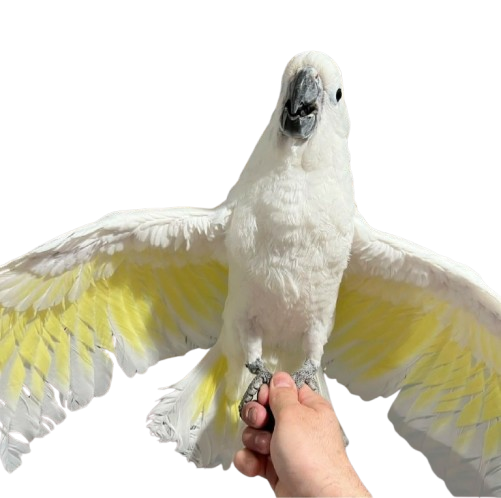
Can cockatoos be left alone during the day?
Leaving a cockatoo entirely solitary for the typical eight-to-ten-hour workday is generally discouraged by experts because these birds are highly social, sentient creatures that require constant mental stimulation to avoid severe psychological issues like feather plucking or chronic screaming. At COCKATOO FOR SALE HOME, we’ve seen that while a well-adjusted bird can technically handle a few hours of independence if provided with a massive array of foraging toys and a large, safe environment,
the reality of “Can cockatoos be left alone during the day” usually depends on the specific species and the quality of the “independent” environment you create. This post, written from my perspective as a long-time breeder, will walk you through the structural changes, social substitutes, and essential safety measures needed to ensure your feathered companion stays happy when you aren’t there to scratch their head.
Key Takeaways
- Social Limits: Adult cockatoos can manage 4–6 hours alone if conditioned, but longer stretches require a “room-sized” environment or a companion.
- Foraging is Mandatory: Mental engagement through “work-for-food” toys is the only way to keep a lone cockatoo from becoming destructive.
- Species Matters: Smaller Goffin’s cockatoos are often more independent than the “velcro” Moluccan or Umbrella varieties.
- Safety First: Ensure the cage is escape-proof and far from kitchen fumes or drafty windows during your absence.
- The Routine Rule: Maintaining a strict schedule for “out-of-cage” time when you return is vital for their emotional stability.
Can cockatoos be left alone during the day for long hours?
I’ve been breeding and living with these birds for decades now at COCKATOO FOR SALE HOME, and if there is one question that makes me hesitate, it’s this one. When people ask, Can cockatoos be left alone during the day, they’re usually looking for a “yes” so they can justify their 9-to-5 job. The honest truth? It’s complicated. Cockatoos are “velcro birds.” In the wild, they are never—and I mean never—truly alone. They are part of a flock that eats together, flies together, and sleeps together. When we put them in a cage and head to the office, we are essentially asking them to go against millions of years of evolution.
I’ve had Umbrella cockatoos that would practically have a meltdown if I just went to the grocery store. On the flip side, I’ve seen Galahs that were perfectly fine entertaining themselves for a few hours as long as they had a fresh branch to destroy. I think a lot of it comes down to how you raise them. If you spend every single second with a baby bird, you’re teaching them that they can’t be alone. You have to teach them independence early on. Perhaps the most important thing is realizing that “alone” doesn’t have to mean “bored.”
The psychological impact of isolation on parrots
If you’re wondering Can cockatoos be left alone during the day, you have to consider the “why” behind their behavior. A cockatoo has the emotional intelligence of a three-year-old human. Now, imagine leaving a toddler in a room for eight hours with nothing to do. They’re going to find something to break, or they’re going to cry. With cockatoos, that “crying” is a scream that can reach 135 decibels, and that “breaking things” often ends up being their own feathers.
I’ve seen some pretty heartbreaking cases of feather mutilation from birds that were just lonely. It’s a self-soothing behavior, almost like a person biting their nails, but much more extreme. I think people underestimate the sheer mental energy these birds have. If they don’t have a job to do—like foraging or playing—that energy turns inward. It’s a bit of a contradiction, isn’t it? We want these birds because they are so affectionate, but that very affection makes them prone to separation anxiety.
Strategies for managing a cockatoo’s solo time
So, let’s say you do have to work. Can cockatoos be left alone during the day successfully? Yes, but you have to work at it. At COCKATOO FOR SALE HOME, I always suggest a “rotating toy” system. Don’t just give them five toys and leave them there for a month. Change them every couple of days. They need new puzzles. I personally love using “foraging walls”—basically a grid where I hide nuts and seeds inside cardboard or wood. It keeps them busy for hours because they have to work for every single bite.
Another thing I’ve found helpful is “ambient companionship.” I always leave a TV or a radio on for my birds. There are actually YouTube channels made specifically for parrots—lots of colors and bird sounds. It sounds a bit silly, I know, but it breaks the silence. Silence is a sign of danger in the wild. A silent house can be very stressful for a bird that thinks a predator might be lurking.
Top Cockatoo Breeders and Behavioral Experts in the USA
Understanding the nuances of Can cockatoos be left alone during the day requires looking at the best practices in the industry. Here are some of the most authoritative resources and breeders I trust:
1. Michael Anderson at COCKATOO FOR SALE HOME
Our focus is on “Independence Training.” We start our chicks on a routine where they have specific “quiet times” throughout the day. This prepares them for life in a modern home where owners might be away for periods of time. We believe a resilient bird is a healthy bird.
2. The Gabriel Foundation (Colorado)
This is a world-class sanctuary and educational center. They have extensive “Expertise” in parrot psychology. If you’re struggling with a bird that can’t handle being alone, their behavioral consultants are some of the best in the world. They offer deep insights into how environmental enrichment can replace human interaction.
3. Omar’s Exotic Birds (California)
Omar is a well-known breeder and retailer who emphasizes the “Experience” of bird ownership. He’s a big proponent of large play-gyms that aren’t just cages. His philosophy is that if the bird has enough space to move and play, the question of Can cockatoos be left alone during the day becomes much easier to answer.
4. Texas A&M (Schubot Exotic Bird Health Center)
For the scientific and “Authoritative” side, Texas A&M is the leader. They conduct research on avian stress and how isolation affects the hormonal balance of parrots. Their papers are a “Trustworthy” source for anyone wanting to understand the physiological side of bird behavior.
5. Bird Gardens of Naples (Florida)
A rescue and sanctuary that sees the long-term effects of isolation. Their staff has decades of “Experience” rehabilitating birds that have suffered from boredom. They provide excellent “user guides” on how to create a stimulating outdoor or indoor aviary that mimics a natural habitat.
Species Variance: Who handles “Alone Time” best?
Not every cockatoo is created equal. When asking Can cockatoos be left alone during the day, you have to know which species you’re talking about. I’ve noticed a massive difference in my facility at COCKATOO FOR SALE HOME between different types.
| Cockatoo Species | Independence Level | Best Solo Activity |
| Galah (Rose-Breasted) | High | Shredding soft wood and grass mats |
| Goffin’s Cockatoo | Moderate to High | Mechanical puzzles and untying knots |
| Umbrella Cockatoo | Low | High-interaction foraging toys (boxes inside boxes) |
| Moluccan Cockatoo | Very Low | Needs massive “destruction” toys to vent energy |
| Sulphur-Crested | Moderate | Climbing and vertical foraging setups |
Creating a “Safety-First” Solo Environment
If you are going to leave your bird, the environment needs to be bulletproof. I’ve seen birds get their toes caught in poorly designed toys or escape through a door that wasn’t properly latched. At COCKATOO FOR SALE HOME, we recommend a “double-lock” system for clever species like the Goffin’s. They are literal escape artists; they can figure out a simple sliding latch in about thirty seconds.
Also, think about the temperature. If you turn off the AC during the day to save money, your bird might be sitting in a 90-degree room. That’s not okay. On the flip side, avoid placing the cage right under an air vent. They need a stable environment. And please, check your toys for “cotton rope.” If a bored bird shreds cotton rope, they can ingest the fibers, which causes a crop impaction. Stick to sisal or seagrass. It’s safer and more “Trustworthy” for long-term use.
The importance of a “Reunion Routine”
The answer to Can cockatoos be left alone during the day is often “Yes, as long as the evening is dedicated to them.” When I get home, my birds know it’s their time. I make sure they get at least two hours of direct, one-on-one interaction. We do training, we do scratches, or they just hang out on a stand while I prep dinner.
This routine gives them something to look forward to. They learn that the “boring” daytime is followed by a “high-energy” evening. If you come home and just feed them and go to bed, that’s when the behavioral problems start. I think consistency is more important than the actual number of hours. If they know the schedule, they can relax. If the schedule is random, they live in a constant state of “Is Michael Anderson coming back today?” That’s where the stress comes from.
Conclusion
So, Can cockatoos be left alone during the day? Ultimately, yes, they can—but it requires a massive commitment from the owner to prepare the bird and the environment. You can’t just buy a bird and leave it in a bare cage. You have to be an architect of their fun. At COCKATOO FOR SALE HOME, we want to make sure every bird
we sell is going into a home that understands this balance. If you work long hours, perhaps consider a pair of birds or look into a more independent species like the Galah. We are always here to help you navigate these choices, as our goal is a happy bird and a happy owner for the next sixty years.
Frequently Asked Question
Should I get a second bird so my cockatoo isn’t alone?

This is a double-edged sword. While a companion can definitely help with the question of Can cockatoos be left alone during the day, it also doubles your responsibility. Two cockatoos can be twice as loud and twice as messy. Also, there is no guarantee they will like each other! If they don’t get along, you now have two lonely birds in two separate cages. I generally recommend perfecting the “environment” and “routine” first. Only consider a second bird if you truly have the space, time, and budget to handle another 60-year commitment. It’s a big decision that shouldn’t be made just out of “guilt” for being at work.