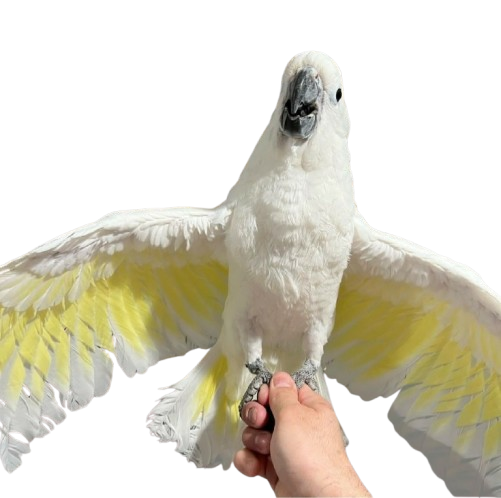
At what age can cockatoos be adopted?
At what age can cockatoos be adopted? This is one of the most vital questions I get from potential owners because the timing of bringing a bird home can genuinely make or break the lifelong bond you’re trying to build. Generally, a cockatoo should never be adopted before it is fully weaned—meaning it can eat solid food and maintain its weight without a syringe—
which typically happens between 14 and 25 weeks depending on the specific species, like a Goffin’s versus a large Moluccan. In this guide, I’ll walk you through why “fledging” and social weaning are just as important as physical weaning, the risks of adopting a “un-weaned” baby, and how COCKATOO FOR SALE HOME ensures our birds are developmentally ready for their forever families.
Key Takeaways
- Biological Readiness: Most cockatoos are ready for adoption between 4 to 6 months of age.
- The Weaning Rule: Never adopt a bird that still requires hand-feeding; this prevents crop infections and behavioral trauma.
- Species Variance: Smaller cockatoos (like Galahs) mature faster than larger species (like Umbrellas).
- Behavioral Health: Birds adopted at the right age are more independent and less likely to develop “velcro” scream tendencies.
At what age can cockatoos be adopted?
When you start looking for a companion, the excitement makes you want to bring them home as early as possible, but the answer to “At what age can cockatoos be adopted?” is governed by biology, not our patience. From my years in the aviary, I’ve seen that the sweet spot is almost always after the bird has “fledged”—meaning it has learned to fly and land confidently—
and has been eating independently for at least two to three weeks. For a smaller species, you might be looking at 14 to 16 weeks. For the bigger guys, it’s often closer to 20 or even 25 weeks. I’ve had some stubborn Moluccans that didn’t want to give up the syringe until they were nearly half a year old!
I think people underestimate the “social” part of weaning. It’s not just about calories; it’s about the bird learning how to be a bird from its siblings or parents. If you ask “At what age can cockatoos be adopted?” and a breeder says “8 weeks, you can finish the feeding yourself,” my advice is to run the other way. I’ve seen too many heartbreak stories where owners accidentally aspirated their babies or caused “stunting” because they didn’t have the professional equipment or experience. A bird that leaves the nest too early is often an anxious bird for life. At COCKATOO FOR SALE HOME, we wait until they are fully self-sufficient because a healthy start is non-negotiable.
The Risks of Early Adoption and Why Timing Matters
If we get too specific about “At what age can cockatoos be adopted?”, we sometimes miss the forest for the trees. The risk of adopting too early—what we call “forced weaning”—is massive. When a bird is forced to eat solids before its digestive tract is ready, it can lead to permanent psychological scarring. These birds often grow up to be chronic “beggars” or pluckers because they never felt food-secure during that critical developmental window. I always tell my clients that those extra four weeks at the breeder’s house are an investment in the next fifty years of the bird’s life.
Perhaps it’s because I’ve spent so many nights checking crop temperatures, but I’ve become very protective of this timeline. A bird adopted at 18 weeks versus 12 weeks is a completely different creature. The older bird has a sense of “self.” It knows how to play with a wood block; it knows how to crack a safflower seed. When you ask “At what age can cockatoos be adopted?”, you’re really asking when the bird is emotionally stable enough to handle the stress of a new house, new sounds, and new people.
Species-Specific Adoption Timelines
Not all cockatoos grow at the same rate. If you are browsing COCKATOO FOR SALE HOME, you’ll notice that our availability dates vary wildly between species.
| Cockatoo Species | Average Adoption Age (Weaned) | Temperament Note |
|---|---|---|
| Galah (Rose-Breasted) | 14–16 Weeks | Highly independent, weans relatively quickly. |
| Goffin’s Cockatoo | 15–18 Weeks | Active and curious; needs time to learn “play.” |
| Umbrella Cockatoo | 20–24 Weeks | Very emotional; prone to regression if moved too soon. |
| Moluccan Cockatoo | 24–28 Weeks | The “giants” take the longest to mature physically. |
| Bare-Eyed Cockatoo | 14–16 Weeks | Generally hardy and straightforward weaners. |
Top Cockatoo Breeders and Species Guide in the USA
Finding a bird is one thing; finding a bird raised with the right “age-appropriate” milestones is another. Here’s a list of considerations and some of the top-rated species types available across the country, especially for those looking through Michael Anderson’s curated networks.
- The Umbrella Cockatoo (Cacatua alba): Often called the “Velcro” bird. If you’re asking “At what age can cockatoos be adopted?” for an Umbrella, wait for at least 5 months. They need that extra time to develop a bit of backbone so they don’t become overly dependent on you.
- The Galah Cockatoo: These pink and grey beauties are some of my favorites. They are ready a bit earlier, around 4 months. They are less “needy” and tend to handle the transition to a new home with a bit more grace.
- The Sulphur-Crested Cockatoo: These are the iconic big whites. Because of their size and powerful beaks, they need to be fully weaned and socialized with other birds before they come to you, usually around the 5-to-6-month mark.
- The Major Mitchell’s Cockatoo: These are stunning but can be “one-person” birds. It’s critical they stay with a breeder long enough to be socialized with multiple humans to prevent them from becoming aggressive to strangers later.
User Guide: What to Ask Your Breeder
When you’re looking at COCKATOO FOR SALE HOME or any other professional setup, don’t just ask “At what age can cockatoos be adopted?” Ask these follow-up questions to ensure the breeder isn’t cutting corners:
- “What variety of foods is the baby currently eating?” (They should list pellets, fresh sprouts, and veggies, not just seed).
- “Has the bird been weight-stable for at least two weeks without supplemental feedings?”
- “Has the bird been allowed to fly?” (Fledging is crucial for brain development).
Preparing Your Home for a Post-Weaned Cockatoo
Once you’ve settled on the “At what age can cockatoos be adopted?” answer (let’s say 20 weeks), you need to prepare for the “regression.” It’s common for a baby bird to take a step backward when they move. They might cry or “wing-flip” like a baby again. This doesn’t mean they aren’t weaned; it means they are scared. I always suggest having some warm, soft food (like oatmeal or mashed sweet potato) ready to offer via a spoon. It’s a great way to bond and comfort them during that first week in a new environment.
Conclusion
Deciding “At what age can cockatoos be adopted?” is really about respecting the natural pace of the bird’s development. While it’s tempting to want a tiny baby you can “hand-feed” to create a bond, the truth is that a professionally weaned bird at 4 to 6 months old will bond with you just as deeply—without the life-threatening risks of amateur hand-feeding. My name is Michael Anderson, and after seeing hundreds of these birds grow up, I can promise you that patience in the first few months pays off in decades of companionship. Visit COCKATOO FOR SALE HOME to see our current fledglings and learn more about our ethical weaning process.
Frequently Asked Question
Q: Can I adopt a cockatoo that is still on one hand-feeding a day to bond better?

A: I strongly advise against it. The “bonding” that happens during hand-feeding is often misinterpreted. You can build a much stronger, healthier bond through play, training, and shared meals once the bird is fully weaned. Bringing a bird home that still needs a syringe even just once a day is a recipe for “behavioral regression” and potential health complications like “sour crop” if the new environment causes the bird stress. It’s always safer to let the breeder finish the job.