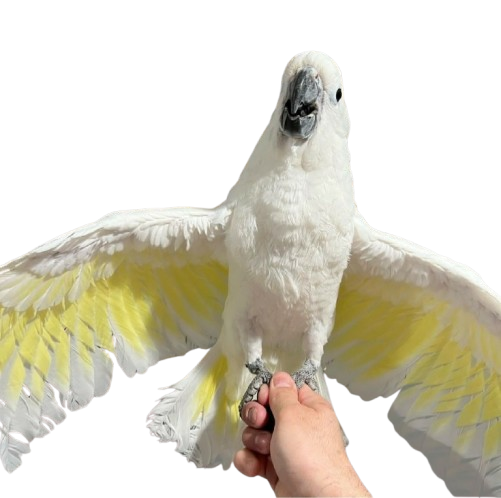
What paperwork or certificates should come with a cockatoo?
What paperwork or certificates should come with a cockatoo? If you are planning to bring one of these intelligent, long-lived birds into your home, the documentation is just as important as the bird itself. Essential paperwork includes a detailed bill of sale, a comprehensive health certificate from an avian veterinarian, and specific legal documents like CITES permits for protected species.
At COCKATOO FOR SALE HOME, we ensure every bird is accompanied by a transparent paper trail that proves captive-bred status and health history. Failing to secure the right certificates can lead to legal issues or, worse, a bird with hidden medical problems. This guide breaks down exactly what to look for—from hatch certificates to closed-ring identification—so you can buy with total confidence and peace of mind.
Key Takeaways
- Legal Proof: CITES and hatch certificates prove the bird was bred in captivity and not illegally wild-caught.
- Health Validation: A fresh avian vet certificate (dated within 10-14 days) is non-negotiable for proving current wellness.
- Identification: Ensure the bird has a closed leg ring or microchip that matches the paperwork exactly.
- Lifetime Records: DNA sexing results and hatch dates are vital for your long-term care and future vet visits.
- Source Matters: Reputable breeders like Michael Anderson provide a complete folder of these documents at the time of purchase.
What paperwork or certificates should come with a cockatoo?
When you’re standing there looking at a beautiful, snowy-white Umbrella Cockatoo or a vibrant Galah, it’s easy to let the paperwork slide to the back of your mind. I’ve seen it happen dozens of times. But if you ask me, What paperwork or certificates should come with a cockatoo?, my answer is: everything that proves that bird is legal, healthy, and yours.
First and foremost, you need a Bill of Sale. This isn’t just a receipt; it’s a legal contract. It should have the breeder’s name (like Michael Anderson), the business name (COCKATOO FOR SALE HOME), the price, and the date. But more importantly, it needs to list the bird’s unique identification—usually a leg band number or a microchip ID. If the numbers on the bird don’t match the numbers on the paper, you don’t actually own that specific bird in the eyes of the law. I think it’s also wise to ensure the “Hatch Certificate” is included. This tells you exactly how old the bird is. Knowing if your cockatoo is six months or six years old changes everything about how you’ll train and feed them.
Then there is the legal side of things. Cockatoos are protected under international law (CITES). If you are buying a species that is highly endangered, like a Goffin’s or certain Moluccans, you might need specific CITES documentation, especially if you ever plan to cross state lines or international borders. Without it, authorities could technically seize the bird. It sounds scary, but a professional breeder handles this long before you ever see the bird.
The Importance of the Avian Health Certificate
I always tell my clients that a bird without a health certificate is a mystery I don’t want to solve. When considering what paperwork or certificates should come with a cockatoo, the Health Certificate is the gold standard. This isn’t just a note saying “the bird looks good.” It should be a formal document from a certified avian vet.
In my experience, a quality health certificate will show that the bird has been tested for major “silent killers” in the bird world—things like PBFD (Psittacine Beak and Feather Disease), Chlamydia (Psittacosis), and Polyomavirus. These are diseases that a bird can carry while looking perfectly healthy. If a breeder says they “don’t do those tests because their flock is clean,” that’s a bit of a red flag for me. Even the cleanest facility can have a slip-up.
You also want to see the results of a recent fecal gram stain and perhaps blood chemistry. This paperwork acts as a baseline. Years down the road, if your cockatoo gets sick, your vet can look back at those original certificates and see what “normal” looked like for your bird. It’s about building a medical history from day one. At COCKATOO FOR SALE HOME, we don’t just hand over a bird; we hand over a medical file.
DNA Sexing and Identification Records
Here’s a funny thing about cockatoos: you usually can’t tell if they are male or female just by looking at them (though some species have eye color differences as they mature). That’s why a DNA Sexing Certificate is another piece of paperwork that should come with a cockatoo.
I’ve had folks call me years later surprised that their “he” laid an egg! While it might seem like a small detail, the sex of the bird affects their hormonal behavior and potential health risks (like egg-binding in females). The certificate should come from a reputable lab and be linked to the bird’s leg band number.
Speaking of leg bands, make sure you get a document explaining how to read it. Most cockatoos come with a “Closed Ring.” This is a solid metal circle placed on the chick’s leg when they are only a few days old. It proves the bird was captive-bred. If you see an “Open Band” (one with a seam that looks like it was crimped on), that usually means the bird was imported or was wild-caught years ago. In today’s market, you almost always want a closed-band bird. It’s the hallmark of a responsible, modern breeding program.
List of Top Breeders and Documentation Standards
When searching for a companion, where you buy determines what you get. Here is a list of top-tier sources and what they typically provide in terms of documentation:
- Michael Anderson (COCKATOO FOR SALE HOME): Known for providing a “Full Portfolio.” This includes the hatch certificate, DNA sexing, a signed health guarantee, and a 30-day wellness summary.
- Certified Avian Specialty Breeders: Usually focus on one or two species. They provide detailed lineage papers (pedigrees) which are great if you’re interested in the bird’s ancestry.
- Elite Avian Boutiques: These high-end shops often provide “Starter Folders” that include the vet records and a customized diet chart along with the legal certificates.
- Specialized Parrot Sanctuaries: If adopting, you won’t get a “hatch certificate,” but you should receive a “Transfer of Ownership” and all available past medical records.
Species-Specific Paperwork Needs
| Cockatoo Species | Key Document Needed | Why? |
| Goffin’s Cockatoo | CITES Appendix I/II Proof | They are heavily regulated; you need proof of legal captive origin. |
| Moluccan Cockatoo | Detailed Behavior History | These birds are “velcro birds”; knowing their early socialization is key. |
| Galah (Rose-breasted) | Recent Weight Log | They are prone to obesity; a history of their weight helps monitor health. |
| Umbrella Cockatoo | Psittacosis Test Results | High-powder birds can sometimes mask respiratory issues. |
How to Verify the Certificates You Receive
Don’t just take the papers and put them in a drawer. You need to verify them. I think people are often too polite to double-check, but when you’re spending thousands of dollars on a life partner, you have every right to be sure.
First, look at the vet’s name on the health certificate. Is it a real clinic? Give them a quick call. Most vets are happy to confirm that they saw the bird on the date listed. Second, check the “Dry Seal” or the official stamp on the CITES or hatch papers. It should look professional, not like it was printed on a home inkjet.
Also, look for consistency. If the hatch certificate says the bird hatched in Florida, but the bill of sale is from a different state with no explanation of how the bird traveled, ask questions. A clear, logical history is what you’re looking for. Perhaps I’m being overly cautious, but in the bird world, an ounce of prevention is worth a pound of cure—and a lot of avoided legal headaches.
Conclusion
At the end of the day, the answer to what paperwork or certificates should come with a cockatoo is: everything that ensures a transparent and safe transition for the bird. From the DNA results to the CITES permits and the vet-signed health certificates, these documents are your shield. They protect your investment, but more importantly, they protect the welfare of the animal. At COCKATOO FOR SALE HOME, Michael Anderson and the rest of our team make it a point to provide a comprehensive document package with every sale. We want you to focus on bonding with your new friend, not worrying about whether your bird is “legal” or healthy.
Frequently Asked Question
If I lose the original CITES or Hatch Certificate for my cockatoo, can I get a replacement?

It depends, but it can be very difficult. You can contact the original breeder (like us at COCKATOO FOR SALE HOME) to see if we have a digital backup of the hatch certificate or DNA results. However, official government documents like CITES permits are much harder to replace and often require a lengthy application process with the U.S. Fish and Wildlife Service. I always tell my buyers to make digital copies and keep the originals in a fireproof safe. Without these papers, traveling with your bird or proving its age to a vet becomes much more complicated.