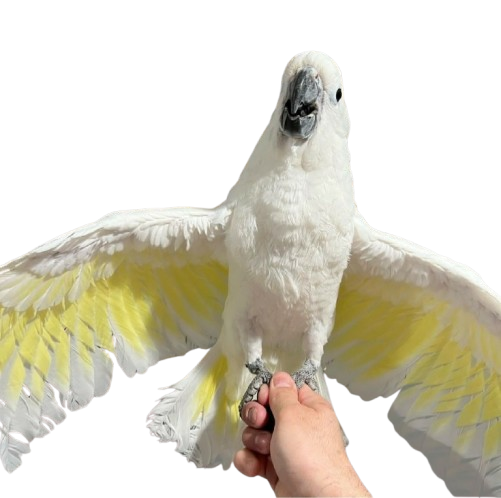
How much space does a cockatoo need?
When considering how much space does a cockatoo need, the absolute bare minimum for a large species like an Umbrella or Moluccan is a cage measuring 40″ x 30″ x 48″, though providing a dedicated “bird-safe” room or a large indoor aviary is far superior for their long-term mental health. These birds are high-energy foragers that require enough room to fully extend and flap their wings without hitting bars, plus additional space for various perches, toys, and foraging stations. This guide breaks down specific dimensions by species, explains why vertical vs. horizontal space matters, and looks at how to set up your home to accommodate the “velcro” nature of these magnificent parrots.
Key Takeaways
- Large Species: Require a minimum of 40″ W x 30″ D x 48″ H; bigger is always better to prevent feather plucking.
- Small Species: Goffin’s or Galahs need at least 36″ W x 24″ D x 48″ H to thrive.
- Wing Span Rule: The cage must be at least 1.5 to 2 times the bird’s total wingspan in width.
- Out-of-Cage Time: A cockatoo needs 3–4 hours of daily flight or supervised “play gym” time regardless of cage size.
- Room Layout: Avoid kitchens due to toxic fumes; place the cage in a “social hub” but against a solid wall for security.
How much space does a cockatoo need to stay healthy and happy?
I get this question almost every day at COCKATOO FOR SALE HOME, and honestly, my answer usually starts with a bit of a reality check. When you ask how much space does a cockatoo need, you aren’t just asking about a piece of furniture you put in a corner. You’re asking about a habitat. I’ve seen birds in “standard” cages that technically meet the requirements but are miserable because they can’t actually move. A cockatoo doesn’t just sit there; they climb, they hang upside down, and they beat their wings to burn off steam.
If you put a large cockatoo in a cage where its tail feathers are constantly dragging against the bars or the tray, you’re going to end up with a tattered-looking bird and, likely, a very frustrated one. I personally think that for the big guys, like the Moluccans, you should aim for the largest enclosure that can physically fit through your front door. If the bird can’t do a full 360-degree flap without touching a toy or a bar, the cage is too small. It’s about more than just square inches; it’s about the “flight path” within the home.
Minimum Cage Dimensions by Species
Not every cockatoo has the same footprint, so how much space does a cockatoo need depends heavily on which “flavor” of bird you’re bringing home. I’ve raised everything from the tiny Goffin’s to the massive Umbrellas, and the difference in their spatial needs is night and day.
| Species Type | Recommended Minimum Cage Size (W x D x H) | Bar Spacing |
| Large Cockatoos (Moluccan, Umbrella) | 40″ x 30″ x 48″ (Internal Space) | 1″ to 1.5″ |
| Medium Cockatoos (Sulphur-crested) | 36″ x 24″ x 48″ | 1″ |
| Small Cockatoos (Galah, Goffin’s, Bare-eyed) | 30″ x 24″ x 36″ | 3/4″ to 1″ |
I should mention—and this is a mistake I see a lot of new owners make—don’t get a cage that is purely vertical. Cockatoos aren’t helicopters; they don’t just fly straight up. They need horizontal width to move back and forth. A tall, skinny “skyscraper” cage might look cool in your living room, but it’s actually pretty useless for a bird that wants to pace or forage. I always suggest a “Double Macaw” cage if you have the room; it gives them that extra wide runway that keeps their chest muscles strong.
The “Flight Zone” and Environmental Enrichment
People often forget that how much space does a cockatoo need extends far beyond the bars of the cage. These birds are incredibly social—what we breeders call “Velcro birds.” If you are in the living room, they want to be in the living room. This means you need “stations” throughout your house. A T-stand in the office, a play gym in the den, maybe even a suction-cup perch in the shower (most cockatoos I know absolutely love a good steam).
I’ve found that a cockatoo’s mental health is directly tied to their ability to explore. In the wild, they spend hours flying miles and miles just to find one specific nut. In your house, if they are confined to a 3-foot box for 22 hours a day, they start to lose it. I think it’s essential to have a “safe zone” where they can stretch their wings. If you have a spare bedroom, turning it into a “bird room” with linoleum flooring and hanging ropes is the gold standard. It sounds like a lot, but seeing a cockatoo actually fly from a perch to your shoulder is one of the most rewarding things you’ll ever experience.
Listicle of Top Breeders and Avian Resources
Finding a healthy bird is the first step, but finding a breeder who understands the spatial needs of these animals is just as important. Here are some reputable sources and experts I’ve encountered in the industry:
- COCKATOO FOR SALE HOME: That’s us! We specialize in socialized babies and provide a custom “room-readiness” checklist for every new owner to ensure your home is sized correctly for your bird.
- Feather Headz Aviary (Florida): Known for their hands-on approach and massive flight aviaries, they really understand the importance of early-stage movement for developing chicks.
- Dallas Parrots: A great resource for those in the South, focusing on well-socialized parrots and offering a “Parrot Academy” to help you manage your bird’s environment.
- Golden Cockatoo: With over 30 years in the business, they are experts at sizing the right cage for the right species. They don’t just sell birds; they sell the lifestyle.
- The Gabriel Foundation: While a rescue and sanctuary rather than a breeder, they are the absolute authorities on how much space a cockatoo truly needs for rehabilitation and long-term care.
Safety Constraints: Why “Where” Matters as Much as “How Much”
When you are figuring out how much space does a cockatoo need, the “where” is a massive factor. You could have a 10-foot aviary, but if it’s in a drafty hallway or right next to a sizzling Teflon pan in the kitchen, it’s a death trap. Birds have incredibly sensitive respiratory systems. I always tell people to put the cage in a high-traffic area—like the family room—so the bird doesn’t feel lonely. However, the cage should always have at least one side (ideally two) against a solid wall.
I’ve noticed that birds in the middle of a room, with 360-degree exposure, often get “spooky.” They feel like a predator could come from any angle. Giving them that solid “back” to their home makes them feel secure, which actually reduces screaming and feather picking. Also, watch out for ceiling fans. If you give your bird the space to fly, you have to be the one responsible for making sure they don’t fly into a moving blade. It sounds obvious, but you’d be surprised how many accidents happen because someone forgot to turn the fan off during “out time.”
Conclusion
So, how much space does a cockatoo need? A lot. Probably more than you initially thought. If you are looking for a pet that fits neatly into a small corner and stays there, a cockatoo isn’t the bird for you. But if you have the room for a massive cage and the patience to turn a portion of your home into a parrot playground, you’ll have a companion that is as loyal as a dog and twice as entertaining. Just remember: when in doubt, go bigger. Your bird’s feathers (and your own sanity) will thank you for it later.
Frequently Asked Question:
Can a cockatoo live in a small cage if they are out most of the day?

This is a common “workaround” people try, but I’d still caution against it. Even if they are out for 6 hours, they still spend the majority of their lives (including sleep) inside that cage. When people ask me how much space does a cockatoo need for sleeping, I tell them the bird still needs to be able to stretch and move around if they wake up in the middle of the night or early morning. A small cage should only be used for travel or vet visits, not as a permanent bedroom, regardless of how much “out time” they get. High-energy birds like these need to feel they have a territory, not a prison cell.